

In an insightful discussion with FaceUp, Manish Bucha, our Managing Partner, shared his expert insights on the evolving landscape of whistleblowing and compliance in the UAE. As the country pushes for stronger corporate governance and ethical practices, whistleblowing systems have become a crucial component of compliance frameworks.
This blog highlights key regulatory changes, the role of technology, and best practices for implementing effective whistleblowing systems, as outlined by Manish Bucha.
To read the original blog, click here
A Changing Landscape for Whistleblowing in the UAE
Whistleblowing in the UAE has seen significant evolution, largely driven by the country’s broader push for enhanced corporate governance and transparency. Traditionally, whistleblowing was viewed as culturally sensitive and often avoided, but today it is considered a vital tool for ensuring ethical conduct within organizations.
The UAE’s governance reforms have significantly raised the importance of whistleblowing as a key element of ethical business practice. The adoption of stronger protections for whistleblowers, coupled with modern reporting systems, has paved the way for more transparent business operations.
Key Regulatory Changes and Protections for Whistleblowers
In response to growing concerns about transparency and corruption, the UAE has introduced a series of regulatory reforms aimed at strengthening whistleblower protections. Key legislative frameworks include:
- Federal Decree-Law No. 31 of 2021 (Penal Code), which provides protection for individuals who report crimes in good faith.
- Dubai Law No. 4 of 2016, which governs the Dubai Economic Security Centre and includes provisions on whistleblower protection.
- DIFC Whistleblowing Law (2022) and ADGM Whistleblower Protection Regulations (2024), which ensure comprehensive protections for whistleblowers in the UAE’s financial free zones.
These regulations not only protect individuals who come forward but also require organizations to implement clear reporting mechanisms to ensure that concerns are addressed in a timely and confidential manner.
Overcoming Cultural Barriers to Reporting
Despite these legal advancements, cultural norms around loyalty and discretion can still pose challenges. Many employees may feel hesitant to report wrongdoing due to concerns about damaging their relationships with colleagues or employers.
However, this attitude is changing:
As companies modernize their compliance frameworks, reporting concerns through formal channels is increasingly viewed as an act of integrity, not disloyalty. Leadership plays a key role in fostering this cultural shift and ensuring employees feel safe and supported when they report misconduct.
The Role of Technology in Compliance
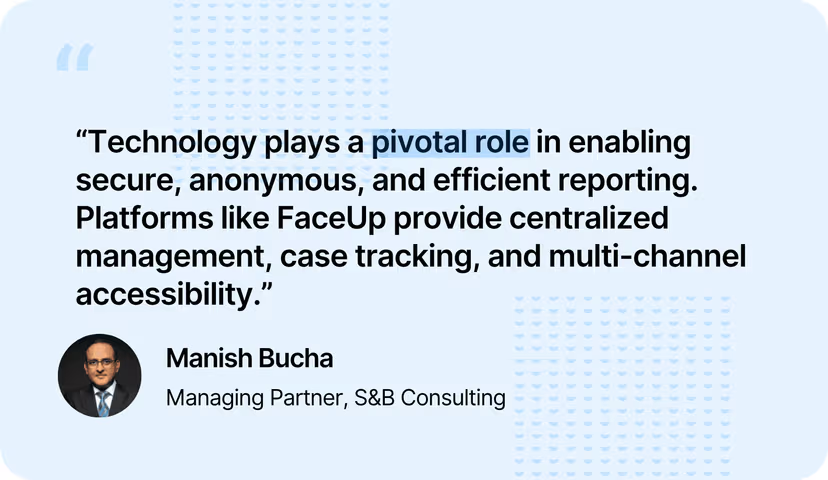
Technology plays a critical role in enabling organizations to build secure, anonymous, and efficient whistleblowing systems. Tools like FaceUp, a leading global whistleblowing platform, help businesses manage case tracking, maintain confidentiality, and ensure compliance with data protection regulations.
Building Compliant Reporting Systems: Best Practices
To ensure compliance with UAE regulations and international best practices, organizations must develop robust reporting systems that are tailored to their unique needs. S&B Consulting recommends starting with a regulatory gap assessment to identify areas where current systems may fall short, followed by the development of clear whistleblowing policies and procedures.
It’s essential that organizations prioritize employee awareness through regular training and communication about reporting mechanisms. Clear policies, leadership commitment, and the use of secure technology platforms like FaceUp can help ensure that whistleblowing frameworks are effective and fully compliant.
Conclusion: Embracing Whistleblowing for Ethical Business Practices
The UAE is moving rapidly toward becoming a leader in corporate governance, with whistleblowing now firmly embedded in its regulatory framework. Companies that embrace these changes and implement strong, compliant whistleblowing systems will not only meet legal requirements but will also cultivate a culture of transparency, trust, and ethical business conduct.
At S&B Consulting, we are committed to guiding businesses through these regulatory shifts. Through our partnership with FaceUp, we help companies design and implement secure, compliant reporting systems that meet both local and international standards. Together, we enable businesses to foster a strong ethical culture, navigate evolving regulations, and ensure long-term success.