

Federal Tax Authority Decision No. 6 of 2026 significantly increases the compliance obligations for Qualifying Free Zone Persons (QFZPs) engaged in the distribution of goods or materials in or from a Designated Zone.
While the underlying Corporate Tax treatment for qualifying income remains unchanged, the Decision establishes a more structured evidentiary framework requiring businesses to demonstrate that they continue to meet the conditions applicable to the qualifying distribution activity.
The introduction of Agreed-Upon Procedures (AUP) requirements represents a shift towards a more documentation-driven approach, placing greater emphasis on contemporaneous evidence, verification procedures, and auditor reporting.
When does the decision apply?
The Decision applies to Tax Periods commencing on or after 1 January 2026.
Which businesses are affected?
The Decision applies to QFZPs that undertake the qualifying activity of distributing goods or materials in or from a Designated Zone and intend to benefit from the 0% Corporate Tax rate on qualifying income.
Why has this Decision been introduced?
The Decision has been introduced to enhance the compliance and reporting framework applicable to qualifying distribution activities.
By establishing additional verification procedures and reporting requirements, the framework aims to ensure that only businesses genuinely undertaking qualifying distribution activities are able to access the benefits available to QFZPs.
The enhanced requirements are also intended to improve transparency, facilitate verification by the FTA, and support consistent application of the UAE Corporate Tax regime.
What Has Changed for Businesses Undertaking Qualifying Distribution Activities?
The Decision introduces additional compliance requirements for QFZPs relying on the qualifying distribution activity. Key changes include:
- Businesses are required to obtain an AUP Report from either the independent external auditor responsible for the annual audit of their financial statements; or another UAE-licensed auditor.
- The AUP Report must document the procedures performed by the auditor and the factual findings arising from those procedures.
- The auditor will perform prescribed procedures to verify key elements of the qualifying distribution activity, including whether:
- the QFZP supplies goods or materials to customers who acquire them for resale or for processing prior to resale; and
- where goods are imported into the UAE by the QFZP, those goods are imported through a Designated Zone in accordance with the Corporate Tax requirements
This represents a shift from relying primarily on contractual arrangements to maintaining comprehensive evidence throughout the distribution lifecycle.
What is the Submission Timeline?
The completed AUP Report must be submitted by the QFZP to the FTA within 30 days from the deadline for filing the Corporate Tax Return for the relevant Tax Period, or within any other timeline specified by the FTA.
How Will the Agreed-Upon Procedures AUP Engagement Work?
A key aspect of the Decision is the introduction of an AUP engagement framework.
Under this approach, an independent external auditor or a UAE-licensed auditor performs prescribed procedures and reports factual findings based on the outcome of those procedures.
The procedures involve verification of specific information using defined sampling criteria. The Decision also establishes a prescribed sampling methodology based on a statistical formula, with the sample required to include higher-value transactions within the relevant population.
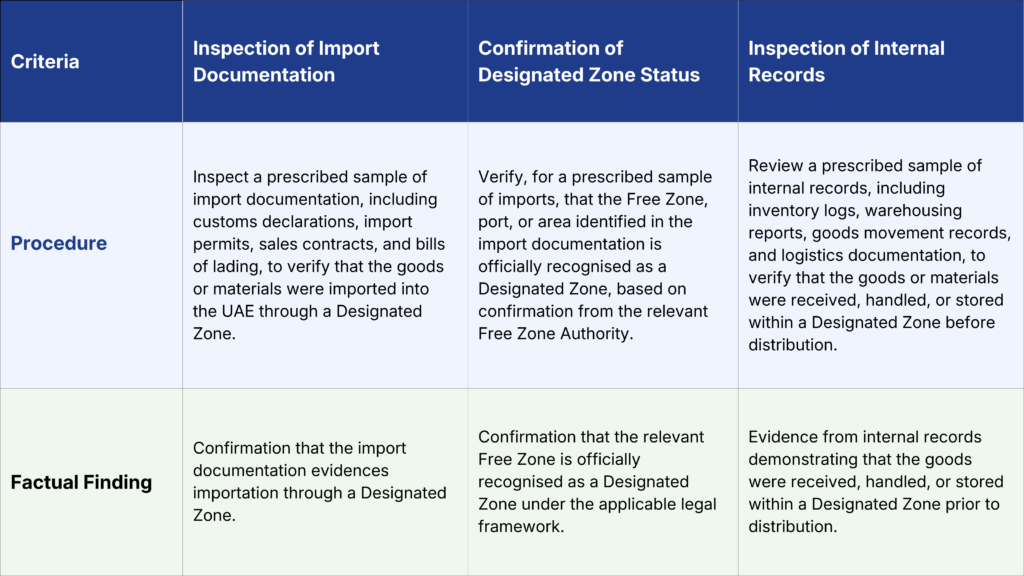
The tables below summarise the key areas subject to review, the applicable sampling approach, and the expected factual findings.
Table 1 – Verifying Reseller Status
The procedures below focus on establishing whether customers qualify as resellers of goods or materials supplied by the QFZP.
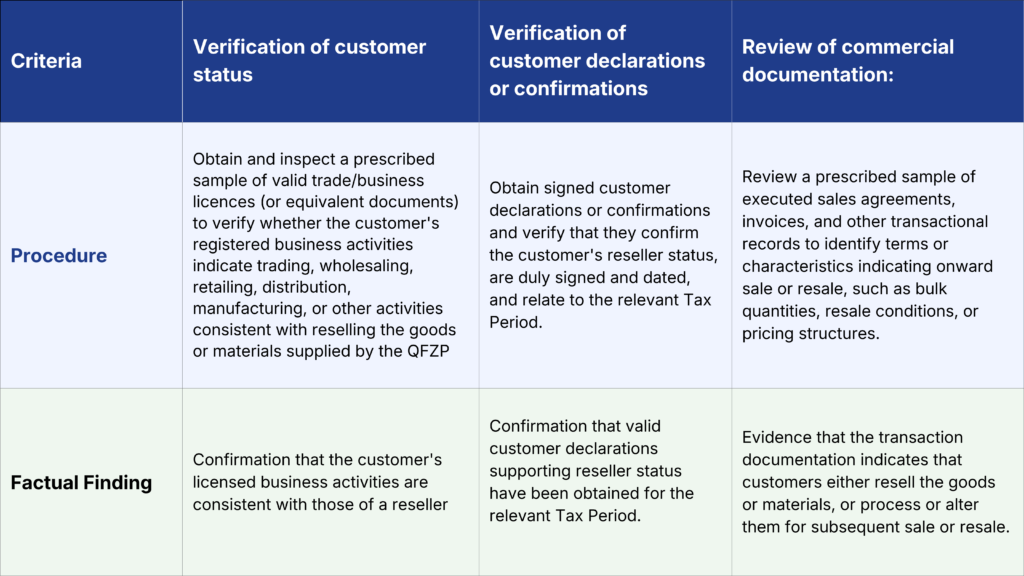
Table 2 – Verifying Importation Through a Designated Zone
The procedures below support verification that goods or materials imported by the QFZP have entered the UAE through a Designated Zone.
Sampling Requirements
The auditor is not required to review every transaction. Instead, testing is performed using a prescribed sampling methodology.
The sample size is calculated using the statistical formula specified in the Decision,
Where:
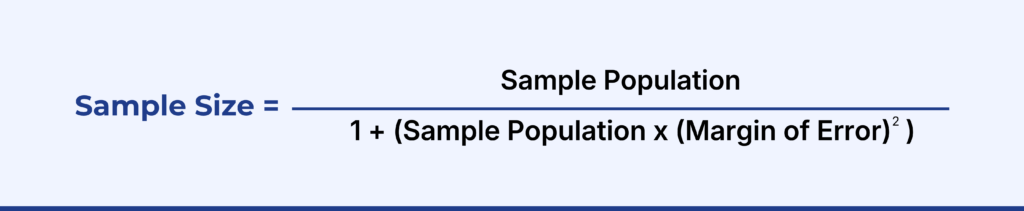
- Sample Population represents the total number of customers, agreements, or imports subject to testing.
- Margin of Error is set at 10%.
- The samples must include the highest-value transactions in the relevant tax period.
Failure to submit the required AUP Report may affect the QFZP’s ability to demonstrate compliance with the conditions applicable to the qualifying distribution activity.
Consequently, businesses may face challenges in maintaining their eligibility for the QFZP regime and the application of the 0% Corporate Tax rate on qualifying income.
Practical Considerations for Businesses
Businesses operating as QFZPs should view this Decision as more than an additional filing requirement.
The new framework will likely require coordination between tax, finance, operations, logistics, customs, procurement, sales and external auditors.
In many organisations, customer onboarding procedures, document retention policies and ERP systems may require enhancement to ensure that the required evidence is collected contemporaneously rather than retrospectively during the annual audit process.
Businesses should also engage with their auditors well before the Corporate Tax compliance cycle to avoid delays in completing the mandatory engagement.
Final observations
FTA Decision No. 6 of 2026 does not change the conditions for qualifying income under the UAE Corporate Tax regime. However, it significantly enhances the level of evidence required to demonstrate compliance with those conditions.
The Decision reflects the FTA’s continued focus on governance, transparency, and documentation-based compliance.
Businesses that proactively strengthen their processes, controls, and supporting documentation will be better positioned to maintain their QFZP status and manage Corporate Tax compliance risks effectively.
S&B Consulting can help businesses assess the impact of the new requirements, strengthen their documentation processes, and support compliance with the enhanced obligations for Qualifying Free Zone Persons under the UAE Corporate Tax regime. Connect with us today!